Vendors managed on value
in L&D departments across several sectors
When Tulser strengthens an L&D department, value-based vendor management pays for the work.


L&D Business Models
The Arets L&D Business Models show which model your L&D runs and which one your business needs. Choose the model, and you choose the programs L&D puts to work.
“What does L&D actually deliver?”
Budget, vendors and intake follow habit, not a deliberate choice of model.
L&D budgets are cut first.
Where does L&D stand, and where does the organization need it to be? The scan and the assessment deliver today’s canvas and the three cells that keep L&D where it is.
Each project changes a few cells in your own work: the strategy, the learning strategy, the vendors or the annual plan.
The new model holds with the programs that belong to it, such as the Performance Consultant AI and team and organizational learning.
Five to eight people
The CLO or L&D director, learning leaders and the people responsible for intake, design and vendors.
One person from the business
Joins the whole route. At the end, the executive team or the business unit decides.
Senior experts
Work on your own case, with the scan, the canvases and the L&D assistant.
Does the question start with one training request or one team? Then another program fits better. Here, the L&D leadership chooses the model first, and with it the programs that follow.
Performance Consultant AI (L&D)Team & organizational learning
Every project is a LOOP project in your own work, with your own team and your internal client. Two to three months later the team works differently, and the organization can see it.
The L&D team works with a Tulser expert on the model, the canvas and the next cells to change, with a knowledge shot for every cell that changes.
The team changes the cells in its own organization: the intake, the budget, the vendor conversation and the KPI with the line. Then it looks back together.
The team writes the new way of working into the annual plan, the budget or the mandate. That is where the model really changes.
L&D handles every new request, vendor and budget round according to the new model. With the next change, the LOOP starts again.
Example of a twelve-week project, with the scan in week 1, the re-scan in week 12 and the executive session as the decision. A six-week project follows the same rhythm, with sessions in weeks 1, 2, 4 and 6.
One project changes a few cells. The next one builds on it. The L&D assistant keeps the living canvas, and Tulser stays on call.
The L&D leadership chooses the route the organization needs. Moving from HR KPIs to business KPIs makes business impact measurable. Choosing the Learning Specialist model delivers efficient, effective and enjoyable learning programs, measured in HR KPIs the business recognizes.
Measured by the re-scan, the agreements in the annual plan and the KPIs L&D agrees in advance with their owners.
Vendors managed on value
in L&D departments across several sectors
When Tulser strengthens an L&D department, value-based vendor management pays for the work.
Cases anonymized, at the client’s request.

A conversation about where L&D stands today and the cell that should change first. Free.
One project, fitted to your organization.
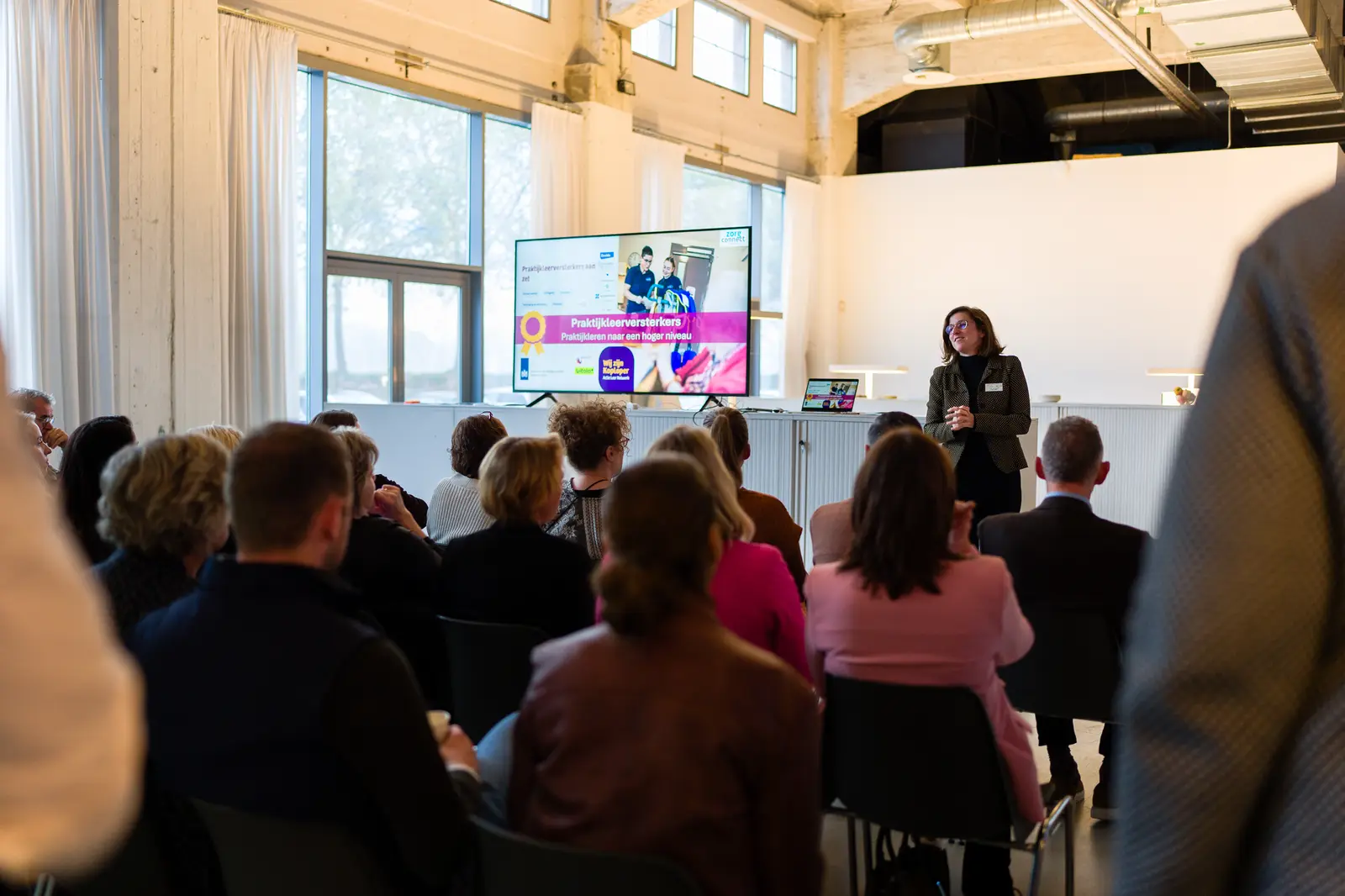
The first session with the L&D leadership and the internal client.
No. The right model depends on what the organization needs. Where L&D mainly runs vocational programs and certificates, the Learning Specialist model can be exactly right. The route starts at that level, not at the level L&D would like for itself.
About four hours a month per member of the L&D leadership, mostly in work the team does anyway: the annual plan, the budget and the vendor conversations.
This program changes the model of L&D. The Performance Consultant AI changes how L&D handles every training request. The second often follows the first.
That depends on the product and the size of the organization. A proposal follows the first conversation.