Compliance
Safe care is proven in the team, not on an attendance list.
The program Provably competent, together
Entry, months 1 to 3, including the licence for the first year.
- The maturity assessment of your current approach
- A compliance prototype for one team or one theme
- The peer check in the work, with evidence you can show
- The compliance book as the basis under the conversation
This is what we deliver.
A program with an annual licence
All services come with an annual licence: a program with a licence, and the knowledge block connected to your organisation.
Connected to the AI of your organisation
We deliver the knowledge base and connect it to the AI your organisation already uses. Read-only, every answer with source, version and date. The peer check and the maintenance go into the assistant as the Compliance edition.
Working, learning, implementing
And we help people learn.
- Working On a real task
- Learning The method while you apply it
- Implementing The result stays in use
A meeting with the clients
Once a quarter, a meeting with the clients.
Three steps the organization takes itself.
No implementation track beside the work. A mixed cohort learns the approach and applies it in its own teams from the first week.

Preparation
At the end there isA board decision on the level the organization wants to prove, with the business case underneath.
The peer check
At the end there isTeam learning that runs, and evidence from the work itself instead of from a test day.
Team learning and the maintenance kit
At the end there isA team that carries its own quality, and an organization that feeds patterns from teams into policy.
Learn more.
The target met, the intention missed.
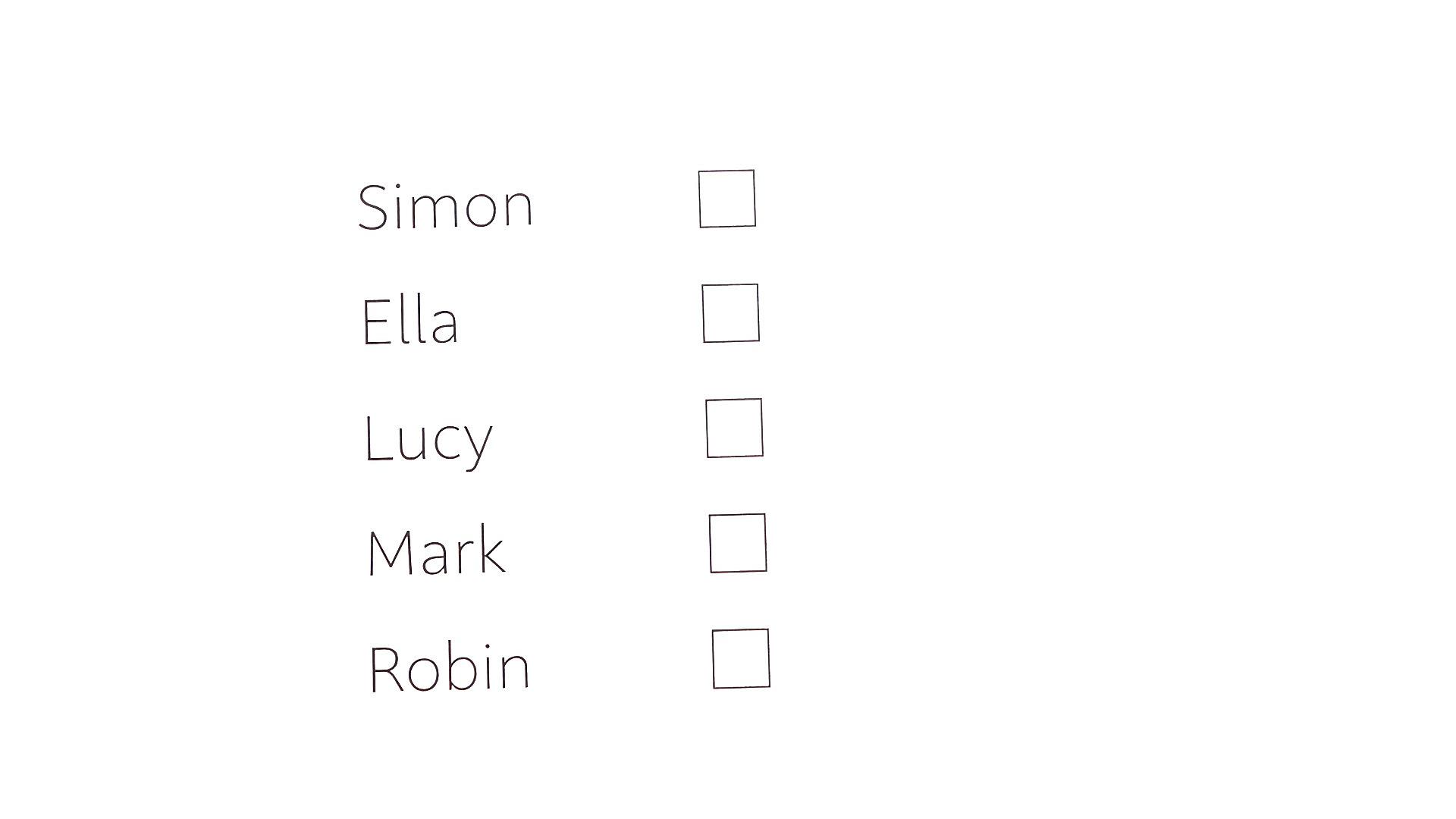
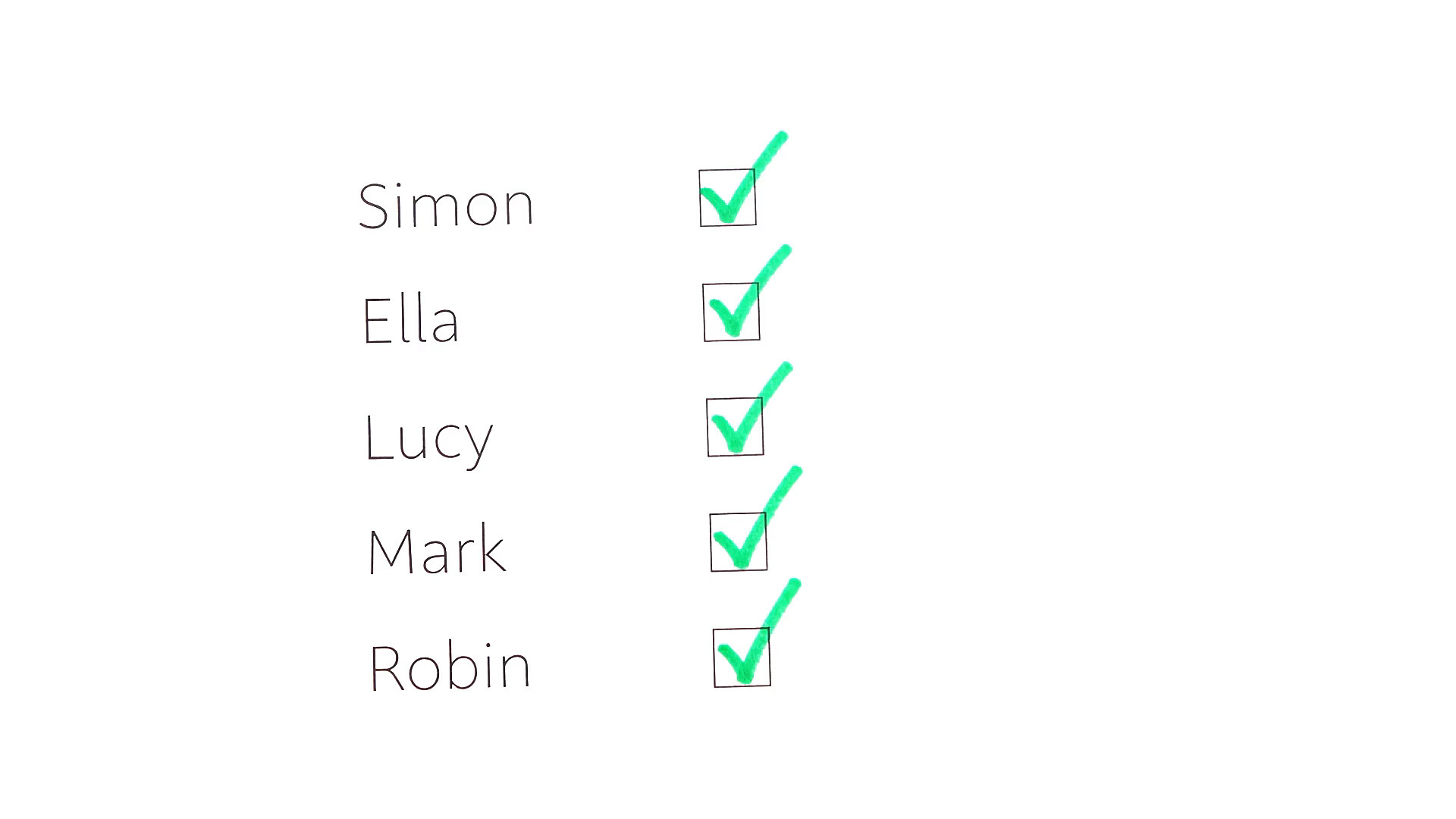
Nobody meant it this way. Ticking boxes began as the answer to a fair demand and grew into the goal itself.
The dashboard turns green
At the end of a busy shift a care worker logs in to finish a module. The overview is complete, the workload is unchanged and nothing at the bedside has become different. The record is correct. The intention, safe care, is not in it.
The standard now asks for team learning
The framework of the Dutch Health and Youth Care Inspectorate for home care, district nursing and nursing homes applies since 5 January 2026. Standard 3.3.3 says that learning and development demonstrably happen together with clients and professionals. The Generic Compass says the same under building block 4. Recording only counts with a feedback loop attached.
And the sector does not meet that standard yet
The Living Lab in Ageing and Long-Term Care Limburg studied two years of quality reports. In eighty-five percent it is not described that the report serves reflection, learning and quality improvement. The cycle of measuring, reviewing, adjusting and measuring again is rarely visible, and building block 4 is the thinnest paragraph in almost every report.
What this is not
No extra program beside the work, no new obligation for staff, and no promise that incidents will stop. The approach makes visible what a team does and puts a learning cycle on it. It does not replace the basis, because without recording and individual competence responsible care is impossible.
Four levels of provable competence.
The maturity index shows per level what it proves and what it does not prove. Levels 1 and 2 are the basis. The road runs from there to levels 3 and 4.
Self-declaration
Proves. That a professional declares to be competent for a high-risk procedure.
Does not prove. Whether that declaration holds in practice. Without assessment in the work, every external confirmation is missing.
Individual learning
Proves. That someone completed the e-learning and passed the test, and with a good design also a procedure in a skills lab.
Does not prove. What the team does when it is busy, the dispenser is empty and nobody dares to speak to a colleague.
Team learning
Proves. That this team acts safely in real situations with real clients, checked by a colleague during the work.
Does not prove. Patterns across teams. One team sees its own picture, not that of the organization.
Organizational learning
Proves. That patterns, near misses and improvement actions from teams carry through into policy, rosters and procurement.
Does not prove. Little escapes the picture here. Quality, safety and provable competence coincide.
At levels 3 and 4 individual learning stays necessary, but no longer as the carrier of quality and safety. Whoever is not yet trained learns individually first. Whoever is trained and does the work proves their competence in practice.
Teams see their own numbers and steer on them.
This is the reason to take the step. Not the saving, although that is there too.
One dashboard per team, five to ten indicators.
The team sees its own picture on quality of life, on quality and safety of care and on workload. No certificates and no attendance percentages, but numbers the team itself can act on. Which indicators those are, the team chooses itself, within the context and the frameworks of the organization. The Learning Conversion Framework supports that choice and connects individual learning, team learning and organizational learning, so that what one team works out does not get stuck with that team.
- Quality of life
- Unintended harm
- Near misses
- Handovers
- Workload
- Cycle time of improvements
- And the indicators this team chooses itself
- 1Measuring with the team’s own numbers, not with a questionnaire from outside.
- 2Reviewing after an event, briefly and in a fixed form.
- 3One problem, one move, one owner, one date to look back.
- 4Measuring again, and keeping what works.
What we promise, and what notThe approach makes the performance of a team measurable and puts a learning cycle on it. The improvement itself comes from the team. Whoever guarantees an outcome promises too much, and that is exactly the objection to the tick-box route. Research on behaviour change does show that interventions on the environment and the system have by far the largest effect, while knowledge transfer as the goal of an intervention yields almost nothing (Albarracín et al., 2024).
The form
Working, learning and implementing in one
A mixed cohort of L&D, quality nurses and workplace coaches learns the approach and introduces it in its own organization. Tulser makes itself redundant in the execution and stays involved in the validation. The organization runs it itself and Tulser vouches that what it runs still means something.
Preparation
Policy, resources, and the difference between where the organization stands and where it wants to stand. Which high-risk procedures go into the check, who performs it, where the result lands, and which hours and costs are freed from the old route.
The peer check
The check takes place in the work, performed by a colleague, spread over the year instead of concentrated on a test day. The result lands individually in the competence file, so the tick stays in order. Nobody can fail, because learning from mistakes is the norm. As soon as a check becomes an assessment, honest checking stops within a quarter.
Team learning and the maintenance kit
After Action Reviews, shared mental models and the team dashboard. The maintenance kit of the Learning Conversion Framework keeps the learning cycle closed, with a fixed rhythm, a log and a quarterly conversation. For more complex team situations the consultant chooses from the intervention playbook.
Tools that sit inside the work itself.
Team learning asks more than an agreement. At every level of the maturity index something is ready that a team uses right away.
The personal AI assistant
For the care professional. The answer comes at the moment of need, in the language of the question, from a canon kept by an editorial board. No module up front, but expertise at the moment the question arises, day and night.
The Tulser Expertise Amplifier
For the team. The approach to team learning sits inside the assistant the organization already uses. The Compliance edition holds the peer check and the maintenance, the LCF edition the intervention playbook and the team scan. One connection, no platform project.
The maintenance kit and the patterns
For the organization. The rhythm, the log and the quarterly conversation come from the Learning Conversion Framework, together with the patterns that rise from teams and carry through into policy, rosters and procurement.
Individual, team and organization in one line
The Learning Conversion Framework connects the three levels. What an individual learns has to reach the team, and what a team works out, the organization has to keep. Without that framework team learning stays a series of loose sessions and the yield disappears as soon as the roster changes.
Read about the learning solutions with the LCFFrom practice. At a care organization that works this way, the approach came up during a visit of the Dutch Health and Youth Care Inspectorate. The inspectorate judged the way of working there a good fulfilment of the standard. Two things belong with that. An inspectorate does not approve suppliers and speaks about the care of that organization, not about Tulser. And what it shows is that the peer check in the work holds up as evidence in a real visit, and that is exactly what a shift like this is about.
From reactive to proactive compliance.
Compliance shifts from a program that exists to a program that works. That is not a Dutch peculiarity.
Supervision looks at whether it works, not whether it exists.
In the United States the shift is now written into enforcement policy. That is no standard for Dutch care, but it is a direction.
In the United States that shift is now part of enforcement policy. The Department of Justice has prosecutors assess a compliance program along three questions, and the third asks literally whether the program works in practice. The guidance explicitly warns against a paper program, a program that exists on paper but has not been implemented, evaluated and revised. Since the revision of September 2024 an organization must also show that it measures the value of its investment in compliance and adjusts its policy on risks that emerge from incidents. In American healthcare the General Compliance Program Guidance of the Office of Inspector General, of 6 November 2023, points the same way. That guidance is voluntary and not binding, but it asks for continuous monitoring and makes quality and patient safety part of the compliance program itself. This is American policy and no standard for Dutch care. What it is worth is the direction. On both sides of the ocean supervisors no longer ask whether the program exists, but whether it works.
Three decisions, in this order.
The implementation sits in the entry and is not a separate item. The certification is not a fourth product, but the visible outcome of the maintenance.
The working, learning and implementing program with the peer check, including the licence for the first year. One annual amount, no pile of loose items.
The rhythm, the log, the quarterly conversation and the patterns. Including the annual method update and access to the benchmark.
The Expertise Amplifier Compliance on the organization’s own knowledge library, so teams get their answer at the moment the question arises.
You rebuild the business case yourself. The sum is deliberately simple. Put the purchase of e-learning and testing, plus the cost of the hours staff spend on them, against a peer check that takes place in the work and costs no rostered hour. With the own contract prices and the own hourly wage a controller recalculates that within an hour. A business case the buyer rebuilds himself convinces more than a business case he has to believe. One item is in no sum at all. Avoidable harm to a client cannot be paid for with money, and avoidable death even less. The saving is the reason to begin. The reason is another one.
What we do not do, and why not.
These boundaries are in the contract. Without them, honest checking stops.
The certification measures the maintenance
Never how good a team is. A quality judgement at team level turns the check into an assessment, and whoever feels assessed stops checking honestly within a quarter.
No rankings by name
The benchmark compares practice levels and cycle time, is voluntary and anonymized, and shows percentiles only with enough participants per reference group.
The result goes to the competence file
What the team shows stays anonymous and never points back to one person. The organization chooses the system in which it keeps the checks.
We do not judge the quality of care
That judgement belongs to the organization and its professionals, and we leave it there.
The reasoning, to read for yourself.
Whoever wants to check the argument finds it here. The maturity index is in the book, the argument in the white paper.
White paper Safe care is proven in the team Short white paper on why safe care becomes visible in the team, and what that yields for the organization. Fourteen pages, in Dutch.
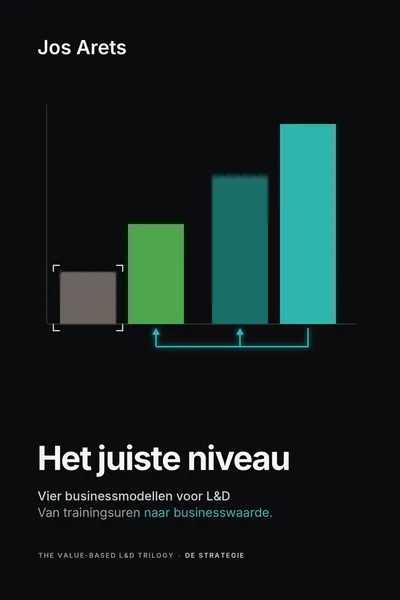
White paper Arets L&D Business Models Four business models for the L&D function, and the single lever that moves a function from one to the next. Eight pages. Provably competent, together
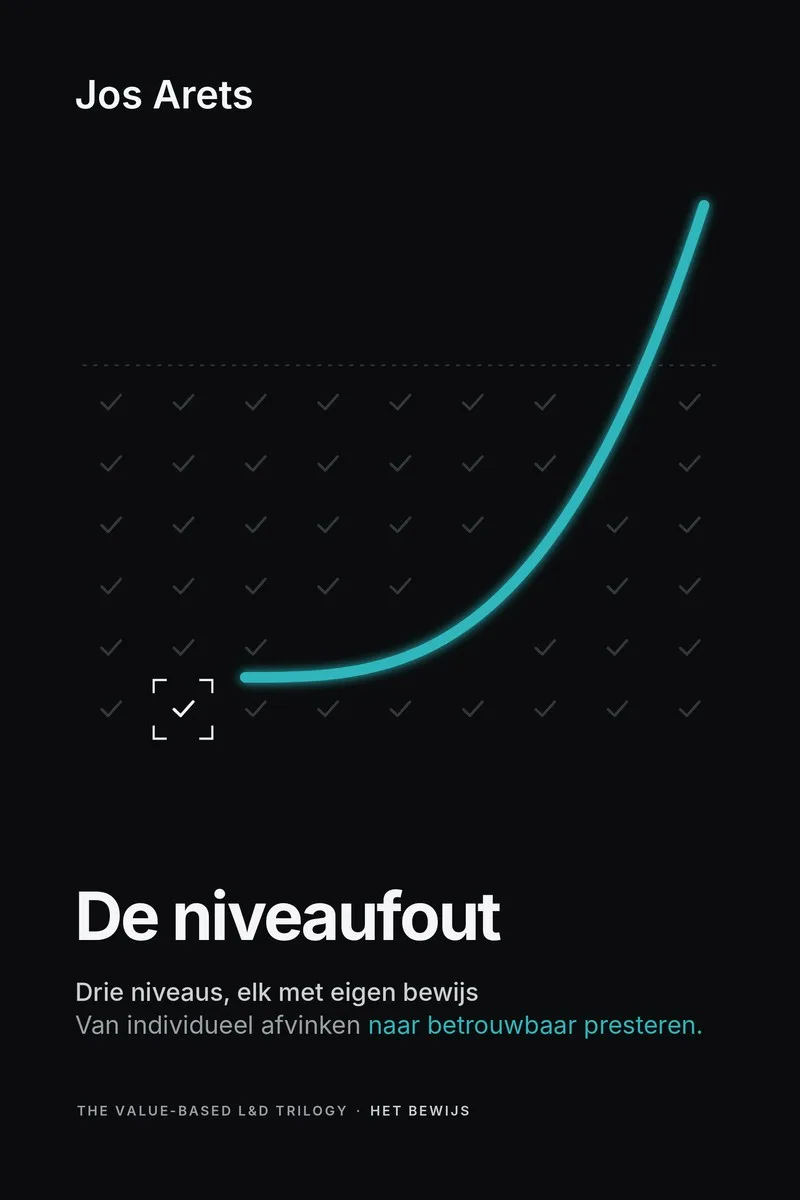
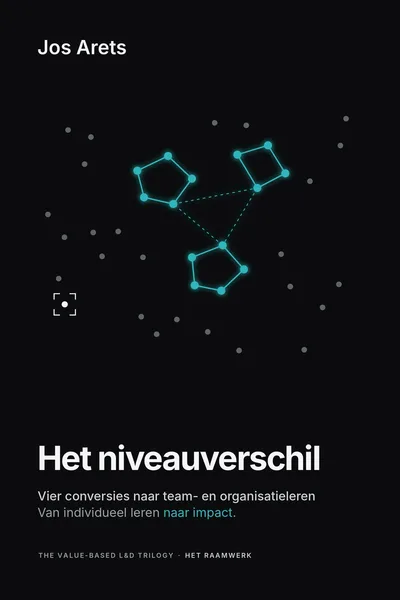
The book on the road from self-declaration and e-learning to team and organizational learning, with the maturity index as the common thread. In Dutch.
We have this conversation with L&D and with quality and safety.
Not with a presentation, but with the organization’s high-risk procedures on the table. Which go into the peer check, who performs it, and which hours are freed from the old route. One session is enough to see whether this fits.